← Selected Work

Case Study · 2007 – Present
SF New Tech.
One of the earliest founder communities in San Francisco. Community building before “community” became fashionable.
Case Study · 2007 – Present
One of the earliest founder communities in San Francisco. Community building before “community” became fashionable.
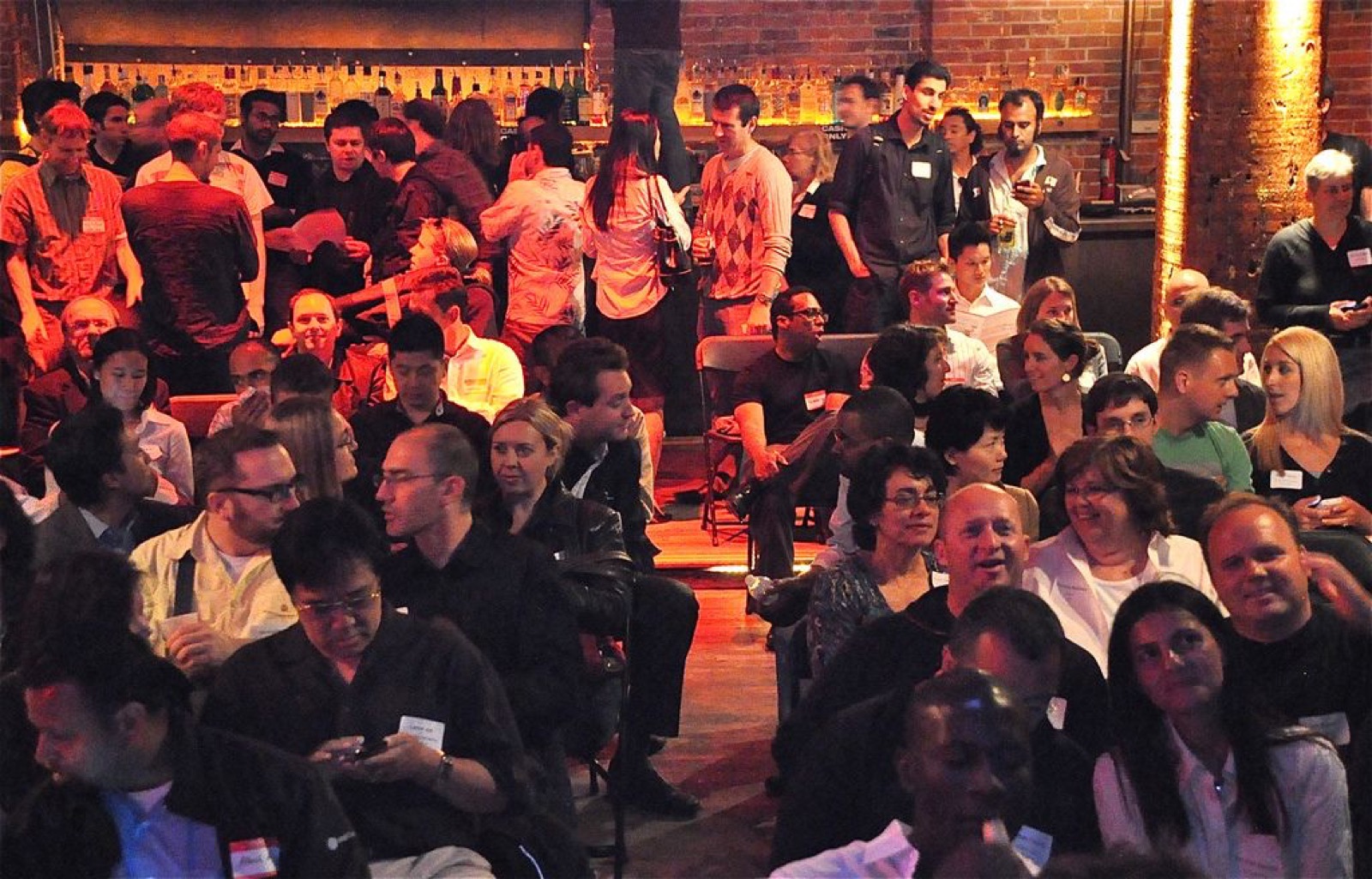
In the mid-2000s, the San Francisco tech scene was full of founders and thin on rooms. Y Combinator was young. Twitter and Facebook were still finding themselves. The mainstream idea of “tech community” hadn’t formed yet. Founders were meeting each other at coffee shops, on IM, at parties nobody had thought to organize.
SF New Tech grew out of my early work at Meetup, where I’d been employee #5 watching the same instinct scale globally. The room I wanted was the one Meetup made possible but hadn’t yet held for SF’s founder scene. So I built it: a monthly demo night. Six founders, five minutes each, Q&A, drinks, everyone stays. The format was simple; the discipline was curation. Which six founders. In what order. With what audience in the room.
The event held for years because of two things: a real hosting instinct (people were welcomed by name, introductions were made intentionally, no one was left in a corner) and a real bar for what got demoed (the founders selected were shipping something people could see and use, not pitching an idea deck).
Community was the strategy, not the tactic. The event was the artifact.
Events
201Monthly demo nights
Companies
1,013Presented on stage
Unicorns launched
18Combined value $80B+
Duration
15 yearsSF’s largest tech community
Stripe ($50B+), Twilio ($10B+), Unity ($13.7B IPO), Reddit ($10B+), and fourteen more unicorns had early demo stages on the SF New Tech stage. 225 funded companies came through the room, collectively raising $3.6B+ and returning $30B+ in exits. Not every night was a Stripe. But every night compounded — because the curation held.
SF New Tech carried the Meetup instinct forward at neighborhood scale and became the template for every subsequent community program I’ve built — FoodBytes, Pivotal, Joby.
The demo nights paused, but the room never really closed. SF New Tech Weekly still goes out every Sunday to founders, operators, and investors who came through the community — a quiet editorial channel that outlasted the venue.
Browse the newsletter archive →
Community programs that last aren’t about the software or the swag or the sponsorship deck. They’re about being a specific host in a specific room, month after month, until people trust that showing up will be worth it. The scale comes from consistency. The consistency comes from someone who actually cares who’s in the room.