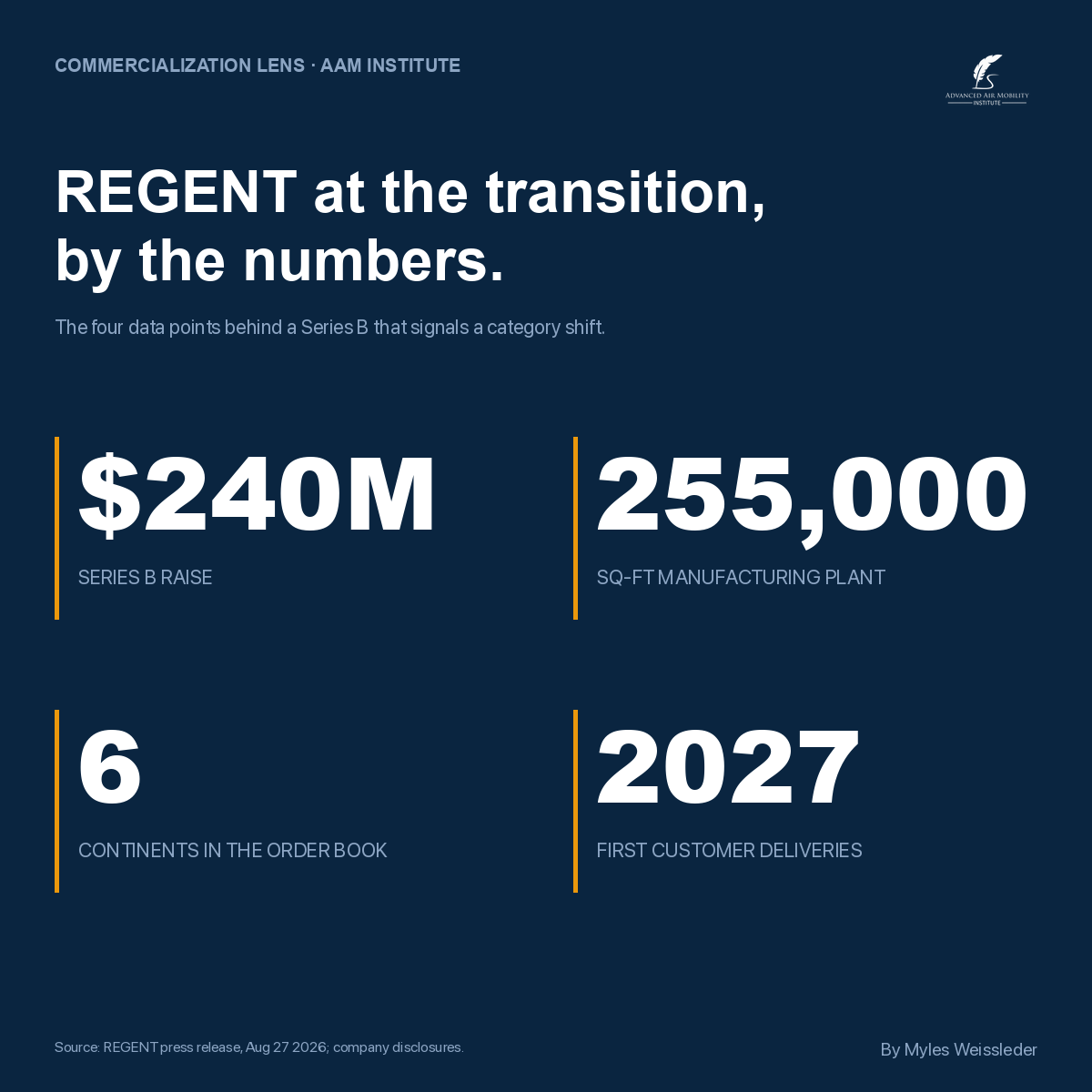
REGENT's $240 million Series B gets your attention. It comes as the Rhode Island company has a 255,000-square-foot manufacturing facility up and running at Quonset, a full-scale Viceroy progressing toward its first flight with humans on board, customers across six continents and fresh capital to push toward production and delivery.
That's a lot coming together at once. But what interests me isn't simply the size of the raise. It's the transition it represents.
For much of the last decade, the emerging mobility conversation has been dominated by technical possibility. Can we build it? Can it fly? Can we certify it? Can we raise enough money to get there?
Those questions aren't going away. But as companies get closer to market, another set starts getting louder. Can we build it repeatedly? Can an operator actually put it to work? Does the infrastructure exist? Do the economics work? Do customers understand it? Do communities trust it? And, ultimately, will people use it?
That's the commercialization gap. Capital can fund the transition. It can't manufacture adoption.
FROM A VEHICLE TO A TRANSPORTATION SYSTEM
REGENT is a useful case study because so many of those questions are beginning to converge. A factory is one thing; producing vehicles consistently is another. An order is one thing; putting that vehicle into a customer's operation is another. A successful demonstration is one thing; making the experience routine enough that passengers stop thinking about the technology underneath them is another.
This is the part of commercialization I find most interesting because it doesn't belong neatly to one department. Manufacturing, certification and operations matter. So do business development, infrastructure, customer experience, communications and community engagement. Inside a company those may be separate functions. Outside the company, they're one experience.
An operator isn't simply buying a vehicle. It's deciding whether an unfamiliar operating model can fit reliably into its business. A community isn't evaluating a spec sheet. It's deciding whether something new belongs in the transportation system around it. And a passenger isn't thinking about years of engineering work when it's time to climb aboard. They're deciding whether they trust it.
FROM NOVEL TO NORMAL
REGENT has an especially interesting version of this challenge because a Seaglider doesn't fit neatly into something most people already know. It floats. It foils. It flies. That's part of what makes it compelling, and part of what makes commercialization hard.
New categories don't inherit familiarity. They earn it through operations, demonstrations, partnerships, customer experiences and repeated exposure. The first time someone sees a Seaglider crossing Narragansett Bay, it should probably look extraordinary.
The real measure of success may be when it doesn't.
When somebody books a trip, climbs aboard and gets where they're going without thinking very much about the technological leap that made the trip possible, it has simply become transportation.
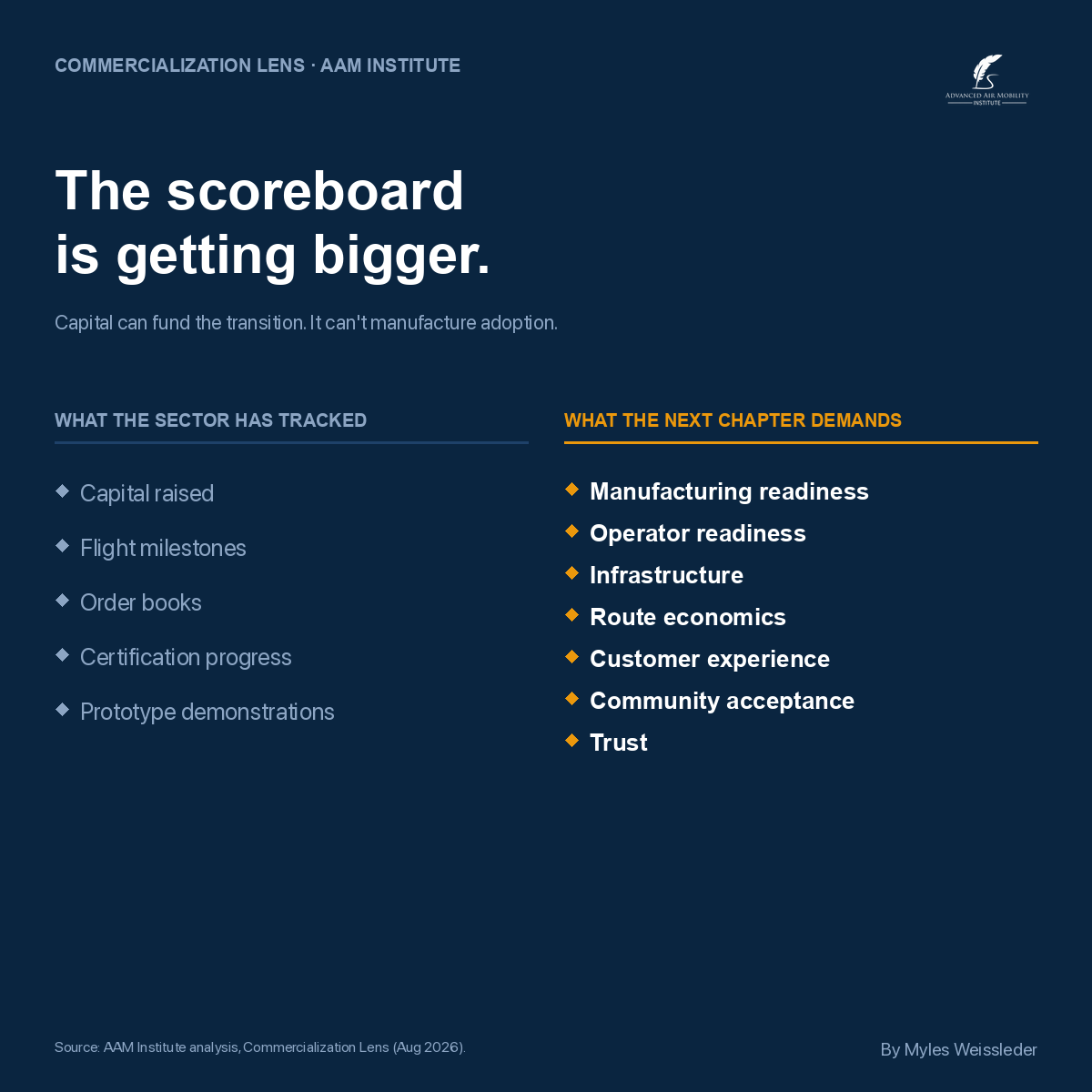
We're approaching versions of that same moment across advanced air mobility. Capital raised, flight milestones and order books will continue to matter, but the scoreboard is getting bigger: manufacturing readiness, operator readiness, infrastructure, route economics, customer experience, community acceptance and trust.
We're moving from asking whether these technologies are possible toward asking whether they can become useful, repeatable and ordinary. REGENT now has another $240 million to help answer that question. The rest of the sector will have to answer it, too.
Because the next chapter of advanced mobility won't be defined only by who gets something new into the air. It will be defined by who figures out how to bring it into the world.